What Is an Addiction Trap? Signs, Causes, and Ways to Break the Cycle
By adminpsy

Introduction
Addiction can gradually become a cycle that is difficult to recognise and even harder to break. What may begin as occasional substance use, excessive gaming, compulsive shopping, repeated gambling, or another rewarding behaviour can eventually become something a person feels unable to control.
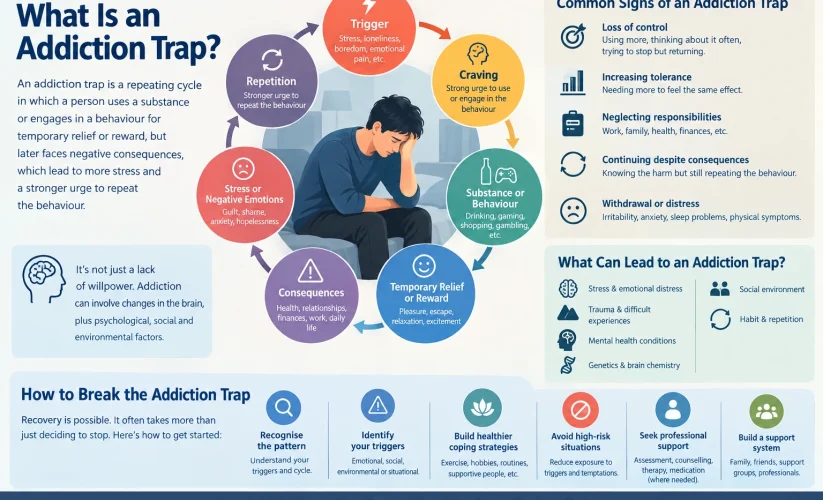
This pattern is often described as an addiction trap a cycle in which a person repeatedly engages in a substance or behaviour for temporary relief, pleasure, escape, or emotional comfort, followed by consequences that can increase stress and create an even stronger urge to repeat the behaviour.
An addiction trap is not simply about a lack of willpower. Addiction can involve changes in the brain’s reward, motivation, decision-making, and stress systems. Psychological, social, and environmental factors can also contribute.
Recognising the addiction trap early can make it easier to seek support and begin changing the cycle.
What Is an Addiction Trap?
An addiction trap is a repetitive cycle in which a person continues using a substance or engaging in a behaviour despite experiencing negative consequences.
The cycle may look like this:
Trigger → Craving → Substance or Behaviour → Temporary Relief or Reward → Consequences → Stress or Negative Emotions → Stronger Craving → Repetition
For example, a person experiencing work-related stress may start drinking alcohol to relax. Initially, drinking may provide temporary relief. Over time, they may begin relying on alcohol whenever they feel stressed.
As the behaviour becomes more frequent, it may lead to problems with health, relationships, finances, work, or daily functioning. These consequences can create additional stress, which may then increase the desire to drink again.
This is how an addiction trap can become self-reinforcing.
How Does the Addiction Trap Develop?
Addiction rarely develops overnight. In many cases, it develops gradually.
A person may initially engage in a substance or behaviour because it provides:
- Pleasure
- Relaxation
- Emotional relief
- Escape from difficult thoughts
- Social acceptance
- Excitement
- A temporary reduction in stress
The brain learns that the behaviour produces a rewarding experience. When similar emotional or environmental situations occur again, the person may experience an urge to repeat it.
With repeated use or engagement, the behaviour can become increasingly automatic.
The Addiction Cycle
Stage | What May Happen |
Trigger | Stress, loneliness, boredom, emotional pain, or a specific situation occurs |
Craving | The person experiences a strong urge to use or engage in the behaviour |
Action | They consume a substance or perform the addictive behaviour |
Temporary reward | They experience pleasure, relief, excitement, or emotional escape |
Consequences | Problems may develop in health, relationships, work, finances, or daily life |
Negative emotions | Guilt, shame, anxiety, stress, or hopelessness may increase |
Repetition | The person returns to the behaviour to feel better temporarily |
Understanding this cycle is important because breaking addiction often requires addressing both the behaviour and the underlying triggers.
What Can Lead Someone Into an Addiction Trap?
There is rarely one single cause of addiction. Multiple biological, psychological, social, and environmental factors may interact.
1. Stress and Emotional Distress
People sometimes turn to substances or repetitive behaviours as a way of coping with difficult emotions.
Stress, grief, loneliness, relationship problems, workplace pressure, or emotional exhaustion can increase vulnerability.
The substance or behaviour may provide temporary relief, but it does not resolve the underlying problem.
2. Trauma and Difficult Life Experiences
Past or ongoing traumatic experiences can influence how a person responds to stress and emotional discomfort.
Some individuals may use substances or compulsive behaviours as a way of avoiding painful memories, emotions, or thoughts.
3. Mental Health Conditions
Addiction can occur alongside mental health conditions such as:
- Depression
- Anxiety
- Post-traumatic stress symptoms
- Bipolar disorder
- Attention-related difficulties
- Other emotional or behavioural concerns
Sometimes a person may attempt to manage symptoms of an underlying mental health condition through substance use or another addictive behaviour.
This can create a complicated cycle in which both problems need attention.
4. Genetics and Brain Chemistry
Biological factors can influence a person’s vulnerability to addiction.
Some individuals may be more susceptible because of genetic factors or differences in how their brain responds to rewards, stress, and substances.
Having a family history of addiction does not mean that someone will definitely develop an addiction, but it may increase vulnerability.
5. Social Environment
The people and environment around someone can influence addictive behaviour.
Risk may increase when a person regularly encounters:
- Substance use among friends or family
- Peer pressure
- Easy access to addictive substances or activities
- Social environments that encourage excessive use
- Lack of supportive relationships
6. Habit and Repetition
Repeated behaviour can gradually become a habit.
When a particular action repeatedly produces a rewarding experience, the brain can begin associating specific situations with the expectation of that reward.
Over time, the behaviour may feel increasingly automatic.
Signs You May Be Caught in an Addiction Trap
Recognising the warning signs can help a person seek support before the problem becomes more severe.
Loss of Control
One of the important signs is difficulty controlling the behaviour.
You may notice that you:
- Use more than you originally intended
- Spend longer engaging in the behaviour
- Repeatedly try to stop but return to it
- Feel unable to resist cravings
- Find yourself thinking about it frequently
Increasing Tolerance
With some substances and behaviours, the person may gradually require more to experience the same level of reward or relief.
For substances, developing tolerance can be particularly concerning because increasing amounts can raise the risk of serious health consequences.
Neglecting Responsibilities
Addiction can begin interfering with normal responsibilities.
A person may start neglecting:
- Work
- Education
- Household responsibilities
- Relationships
- Personal health
- Financial obligations
Continuing Despite Consequences
Perhaps one of the most important warning signs is continuing the behaviour even after recognising its harmful effects.
For example, a person may understand that their drinking is damaging their health or relationship but still feel unable to stop.
Withdrawal or Distress
Some substances can cause physical or psychological withdrawal symptoms when use is reduced or stopped.
Depending on the substance, withdrawal may involve:
- Irritability
- Anxiety
- Restlessness
- Sleep difficulties
- Sweating
- Tremors
- Nausea
- Strong cravings
Withdrawal can sometimes be medically dangerous, particularly with certain substances. Therefore, suddenly stopping heavy or prolonged substance use without appropriate medical advice may not always be safe.
Behavioural Addictions Can Also Create an Addiction Trap
Addiction is not limited to substances.
Certain behaviours can become problematic when they become compulsive and interfere significantly with daily life.
Examples may include:
- Gambling
- Gaming
- Compulsive shopping
- Excessive internet use
- Certain forms of repetitive online activity
The key concern is not simply how often someone engages in a behaviour. It is whether the person has difficulty controlling it and whether it is causing meaningful harm or impairment.
How an Addiction Trap Affects Mental Health
Addiction and mental health can influence each other.
A person may initially use a substance or behaviour to cope with anxiety, sadness, loneliness, or stress. However, continued use may eventually worsen emotional symptoms.
Depression
Persistent addictive behaviour can contribute to isolation, relationship problems, financial difficulties, reduced motivation, and feelings of guilt or hopelessness.
These experiences may worsen low mood.
Anxiety
Although certain substances or behaviours may provide temporary relief, the longer-term effects may increase anxiety or emotional instability.
A person may then repeat the behaviour in an attempt to reduce that anxiety, reinforcing the cycle.
Guilt and Shame
People caught in an addiction trap often experience guilt or shame.
They may think:
- “Why can’t I control myself?”
- “I have disappointed everyone.”
- “I should be able to stop.”
- “Nobody will understand.”
These thoughts can make people less likely to seek help.
It is important to understand that shame rarely helps break an addiction. Support, understanding, accountability, and appropriate professional care are generally more constructive.
How an Addiction Trap Can Affect Relationships
Addiction can gradually affect relationships with partners, family members, friends, and colleagues.
Possible consequences include:
- Frequent arguments
- Loss of trust
- Broken promises
- Social withdrawal
- Financial conflicts
- Difficulty fulfilling responsibilities
- Emotional distance
- Increased secrecy
Family members may also feel confused or frustrated when a person repeatedly promises to change but returns to the addictive behaviour.
These relationship difficulties can then create additional emotional distress, further strengthening the addiction cycle.
How to Break the Addiction Trap
Breaking an addiction trap is possible, but it often requires more than simply deciding to stop.
The most effective approach depends on the substance or behaviour involved, the severity of the problem, physical health, mental health, and individual circumstances.
1. Recognise the Pattern
The first step is understanding what happens before and after the addictive behaviour.
Ask yourself:
- What situations trigger the urge?
- What emotions do I experience before it?
- What do I expect the behaviour to provide?
- How do I feel afterward?
- What consequences have developed?
- When do cravings tend to become strongest?
Identifying patterns can help reveal opportunities to interrupt the cycle.
2. Identify Your Triggers
Triggers can be emotional, social, environmental, or situational.
Common triggers include:
- Stress
- Loneliness
- Anger
- Boredom
- Certain people
- Particular locations
- Financial stress
- Relationship conflict
- Specific times of the day
Once triggers are identified, healthier coping strategies can be developed around them.
3. Build Healthier Coping Mechanisms
If addiction has become a way of managing stress or difficult emotions, replacing it with healthier strategies is important.
Depending on the individual, these may include:
- Physical activity
- Relaxation exercises
- Spending time with supportive people
- Structured daily routines
- Hobbies
- Journaling
- Adequate sleep
- Learning emotional regulation skills
These strategies may not eliminate cravings immediately, but they can provide alternative ways to manage difficult experiences.
4. Avoid High-Risk Situations
Reducing exposure to situations that strongly trigger cravings can make early recovery easier.
This may involve changing routines, avoiding certain environments, limiting contact with people who encourage the behaviour, or removing easy access to substances or triggers where appropriate.
5. Seek Professional Support
Professional help can be extremely valuable, particularly when addiction has become difficult to control.
A psychiatrist or other qualified mental health professional can assess:
- The severity of the addiction
- Underlying emotional concerns
- Physical health considerations
- Withdrawal risks
- Co-existing mental health conditions
- Appropriate treatment options
Treatment may involve psychological interventions, behavioural strategies, medication where clinically appropriate, or a combination of approaches.
6. Build a Support System
Recovery can be difficult when someone tries to manage everything alone.
Trusted family members, friends, support groups, and mental health professionals can provide encouragement and accountability.
Having people who understand the recovery process can also reduce isolation.
What Happens If You Relapse?
Relapse can happen during recovery, and it does not necessarily mean that treatment has failed.
Instead of viewing relapse as proof that change is impossible, it can be useful to examine what happened.
Ask:
- What triggered the relapse?
- What emotions were present?
- Was there a stressful event?
- Did I stop following my recovery plan?
- What support was missing?
Understanding the circumstances can help strengthen the recovery plan and reduce the likelihood of repeating the same pattern.
However, repeated relapse should be taken seriously and discussed with a qualified professional so that the treatment approach can be reassessed.
When Should You Seek Help for Addiction?
It may be time to seek professional support when:
- You cannot control your substance use or behaviour
- You have repeatedly tried to stop without success
- Your relationships are being affected
- Work or education is suffering
- You are experiencing financial problems
- Your physical or mental health is deteriorating
- You experience strong cravings
- You experience withdrawal symptoms
- You hide the behaviour from others
- You continue despite recognising serious consequences
You do not have to wait until addiction causes a major crisis before seeking help.
Early support can make it easier to identify the problem, understand its causes, and develop healthier ways of coping.
Frequently Asked Questions About the Addiction Trap
What is an addiction trap?
An addiction trap is a repeating cycle in which a person experiences a trigger or craving, engages in an addictive substance or behaviour for temporary relief or reward, experiences negative consequences, and then returns to the behaviour to cope with those consequences.
Is addiction simply a lack of willpower?
No. Addiction is more complex than willpower. Biological, psychological, social, and environmental factors can influence addictive behaviour. Professional support may be necessary to address the factors maintaining the cycle.
Can someone break an addiction trap without professional help?
Some people may successfully change problematic behaviours with personal and social support. However, professional help is particularly important when addiction is severe, persistent, associated with another mental health concern, or involves substances that can cause dangerous withdrawal.
Can addiction and depression occur together?
Yes. Addiction and depression can occur at the same time and may influence each other. Addressing both concerns can be an important part of recovery.
Does relapse mean recovery has failed?
No. Relapse can occur during recovery. It should be treated as an opportunity to understand triggers and strengthen the treatment or recovery plan rather than as evidence that change is impossible.
Conclusion
The addiction trap is a cycle that can gradually take control of a person’s behaviour, relationships, health, and emotional well-being. What may begin as a way to experience pleasure, reduce stress, escape difficult emotions, or cope with life challenges can eventually become difficult to control.
Recognising the cycle is an important first step. Understanding triggers, developing healthier coping strategies, building a strong support system, and seeking professional guidance can help a person move toward recovery.
Most importantly, addiction should not be approached with shame or judgment. A person struggling with addiction may need understanding, professional assessment, and appropriate treatment rather than criticism.
If you or someone close to you is struggling to control substance use or a repetitive behaviour despite negative consequences, seeking help from a qualified mental health professional can be an important step toward breaking the cycle and rebuilding a healthier life.
Contact Details:
Dr. Anjalika Atrey
Best Psychiatrist in Andheri, Mumbai
Address: Plot no. 38, Gulmohar Road, Andheri west, Juhu, Maharashtra 400049
Phone: 097605 91027
Website: thepsychiatrist.in