What Is Obsessive Compulsive Disorder? Symptoms, Causes, Types and Treatment Options
By adminpsy

Introduction
Have you ever experienced an unwanted thought that keeps returning to your mind, even when you try to ignore it? Or felt compelled to check a locked door repeatedly despite knowing that it is already secure? While occasional unwanted thoughts and repeated checking can happen to anyone, persistent patterns that cause significant distress or interfere with daily life may be associated with obsessive compulsive disorder (OCD).
Understanding what is obsessive compulsive disorder can help individuals recognise its symptoms and understand when professional assessment may be appropriate. OCD is a mental health condition characterised by recurring, unwanted thoughts, images, or urges known as obsessions, and repetitive behaviours or mental acts called compulsions. These experiences can become time-consuming and affect relationships, work, education, and everyday activities.
OCD is more than a preference for cleanliness, organisation, or routine. It can involve a wide range of intrusive thoughts and repetitive behaviours, and its presentation differs from person to person.
This article explains obsessive compulsive disorder, including its symptoms, possible causes, common types, diagnosis, and treatment options.
What Is Obsessive Compulsive Disorder (OCD)?
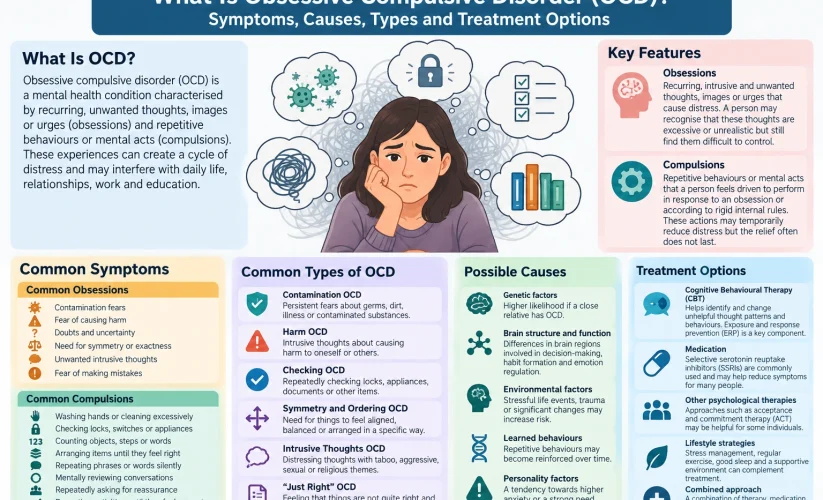
Obsessive compulsive disorder is a mental health condition involving obsessions, compulsions, or both. These experiences can create a cycle of distress in which unwanted thoughts increase anxiety, repetitive behaviours temporarily reduce that anxiety, and the thoughts return.
Obsessions are recurring, intrusive, and unwanted thoughts, images, or urges that cause distress. A person may recognise that these thoughts are excessive or unrealistic but still find them difficult to control.
Compulsions are repetitive behaviours or mental acts that a person feels driven to perform in response to an obsession or according to rigid internal rules. These actions may temporarily reduce distress or create a sense of certainty, but the relief often does not last.
For example, a person who experiences an intense fear of contamination may wash their hands repeatedly, even when they have already cleaned them adequately. Someone who worries about causing harm accidentally may repeatedly check appliances or doors to feel certain that everything is safe.
Not everyone with OCD experiences the same symptoms. Some people have visible compulsions, while others experience primarily mental rituals, such as silently repeating phrases, counting, or reviewing events in their minds.
What Are the Symptoms of Obsessive Compulsive Disorder?
OCD symptoms generally involve obsessions, compulsions, or a combination of both. Their intensity and frequency can vary, and they may change over time.
1. Common Obsessions in OCD
An anxiety attack is an informal term people use to describe a period of intense anxiety, worry, or emotional overwhelm. Unlike a panic attack, it does not have one universally accepted clinical definition.
Anxiety may build gradually when a person faces ongoing pressure, anticipates a difficult situation, or worries about a possible future event. For example, someone may feel increasingly anxious before an examination, a work presentation, a medical appointment, or a challenging personal conversation.
Anxiety can affect both the mind and the body. It may cause physical discomfort, interfere with concentration, and make ordinary responsibilities feel more difficult.
However, not every episode of anxiety indicates an anxiety disorder. Occasional anxiety is a normal response to uncertainty and stress. Professional assessment may be helpful when anxiety becomes persistent, difficult to manage, or disruptive to daily life.
2. Common Compulsions in OCD
Compulsions are repetitive behaviours or mental acts performed to manage distress, reduce uncertainty, or prevent a feared outcome.
Examples include:
- Washing hands or cleaning objects excessively.
- Checking locks, switches, appliances, or documents repeatedly.
- Counting objects, steps, or words according to specific rules.
- Arranging items until they feel symmetrical or complete.
- Repeating phrases, prayers, or words silently.
- Mentally reviewing conversations or past events to seek certainty.
- Repeatedly asking others for reassurance.
- Repeating everyday activities until they feel correct.
These behaviours are not necessarily pleasurable. A person may feel driven to perform them even when they understand that the action is excessive.
How OCD Symptoms Affect Daily Life
OCD does not have one universal set of symptom patterns. The following categories describe common themes that people may experience; they are not separate formal diagnoses.
Common OCD theme | Typical experiences |
Contamination and cleaning | Fear of germs, illness, dirt, or contamination, leading to repeated washing or cleaning |
Checking | Repeatedly checking doors, appliances, documents, or other items to reduce uncertainty |
Symmetry and ordering | Feeling distressed when objects are not arranged in a particular way or when things do not feel complete |
Intrusive thoughts involving harm | Unwanted thoughts or images about accidentally or deliberately causing harm, which may lead to checking or mental rituals |
Religious or moral concerns | Persistent fears about wrongdoing, blasphemy, or failing to meet personal moral standards |
Unwanted sexual thoughts | Distressing, intrusive sexual thoughts or images that may lead to avoidance, mental reviewing, or reassurance-seeking |
Some people experience several themes simultaneously, while others experience different themes at different times.
The term Pure O is sometimes used informally to describe OCD dominated by intrusive thoughts. However, people who appear to have no visible compulsions may still experience mental rituals, such as reviewing thoughts, repeating words internally, or seeking certainty. A qualified professional can assess the nature of these experiences.
What Causes Obsessive Compulsive Disorder?
There is no single confirmed cause of OCD. Research suggests that a combination of biological, genetic, psychological, and environmental factors may contribute to its development.
1. Genetic Factors and Family History
OCD can occur in multiple members of the same family. Research suggests that genetic factors may contribute to susceptibility, although having a family history does not mean someone will necessarily develop the condition.
2. Brain Function and Biological Factors
Studies suggest that differences in certain brain circuits involved in habits, decision-making, error detection, and behavioural regulation may be associated with OCD. Researchers continue to investigate the biological processes involved.
OCD cannot be explained by a single brain chemical or one specific biological mechanism.
3. Stressful Life Events
Major life changes, prolonged stress, or distressing experiences may influence the onset or severity of symptoms in some individuals. However, stress alone does not explain every case of OCD, and symptoms can develop without an identifiable triggering event.
4. Psychological and Behavioural Patterns
Repeatedly performing a behaviour to reduce anxiety can reinforce the urge to repeat it. For example, checking a lock may temporarily reduce uncertainty, making the person more likely to check again the next time doubt arises.
This pattern can become part of the cycle that maintains OCD symptoms.
5. Childhood and Adolescence
OCD can begin during childhood, adolescence, or adulthood. When symptoms appear in younger individuals, they may affect schoolwork, friendships, family routines, and independence.
Persistent symptoms in children and adolescents should be assessed by an appropriately qualified professional rather than dismissed as ordinary habits.
How Is Obsessive Compulsive Disorder Diagnosed?
There is no single blood test or scan that can independently diagnose OCD. Diagnosis generally involves a clinical assessment by a qualified mental health professional.
The assessment may include:
- Discussing the nature and frequency of unwanted thoughts and repetitive behaviours.
- Understanding how much time symptoms occupy each day.
- Assessing the level of distress and interference with daily activities.
- Reviewing personal and family medical history.
- Considering other mental health conditions or physical factors that may contribute to the symptoms.
OCD is generally considered when obsessions or compulsions are time-consuming, cause significant distress, or interfere with important areas of life. Spending more than an hour a day on symptoms can be one indicator, but diagnosis depends on the overall clinical picture rather than a time threshold alone.
A professional assessment also helps distinguish OCD from other conditions that may involve anxiety, repetitive behaviours, intrusive thoughts, or a strong preference for order.
What Are the Treatment Options for OCD?
Treatment for obsessive compulsive disorder depends on symptom severity, individual needs, and the person’s clinical assessment. Psychotherapy, medication, or a combination of approaches may be considered.
1. Cognitive Behavioural Therapy (CBT)
Cognitive behavioural therapy is a structured form of psychotherapy used to address unhelpful thought patterns and behaviours. For OCD, treatment may help individuals understand how compulsions maintain the cycle of anxiety and develop healthier responses to intrusive thoughts.
2. Exposure and Response Prevention (ERP)
Exposure and response prevention is a specialised form of CBT commonly used for OCD.
ERP involves gradually facing situations, thoughts, or triggers that cause distress while learning to resist the urge to perform compulsions. Treatment is planned collaboratively with a trained professional and adjusted according to the individual’s needs.
For example, a person who repeatedly checks a lock may gradually practise leaving it after a reasonable check, without returning to check again. The approach is structured and should not involve unsafe exposure.
3. Medication
A psychiatrist or another appropriately qualified medical professional may consider medication when indicated. Selective serotonin reuptake inhibitors (SSRIs) are commonly used in the treatment of OCD.
The choice of medication depends on the individual’s symptoms, medical history, other medicines, potential side effects, and treatment preferences. Benefits may take several weeks to become noticeable, and treatment requires appropriate follow-up.
Medication should be taken only under medical supervision. Do not change or discontinue prescribed medication without consulting the treating professional.
4. Combined Treatment and Follow-Up
Some individuals may benefit from a combination of psychotherapy and medication. Follow-up appointments help assess progress, address difficulties, and adjust the treatment plan when needed.
Treatment response varies from person to person. A mental health professional can discuss realistic expectations and suitable options based on the clinical assessment.
When Should You Seek Professional Help?
Consider seeking professional assessment if:
- Unwanted thoughts repeatedly cause significant distress.
- You feel compelled to perform repetitive behaviours or mental rituals.
- Checking, cleaning, counting, or reassurance-seeking consumes considerable time.
- Symptoms interfere with work, education, relationships, or everyday activities.
- You avoid places, people, or responsibilities because of intrusive thoughts or fears.
- You feel embarrassed, overwhelmed, or unable to manage the symptoms independently.
Seeking help does not require waiting until symptoms become severe. Early assessment can help identify the nature of the difficulties and guide appropriate care.
If you are experiencing severe emotional distress or feel unable to keep yourself safe, seek urgent professional assistance or contact local emergency services.
Frequently Asked Questions About Obsessive Compulsive Disorder
1. What is obsessive compulsive disorder in simple words?
Obsessive compulsive disorder is a mental health condition in which a person experiences recurring, unwanted thoughts or urges and may feel compelled to perform repetitive behaviours or mental acts to manage the distress they cause.
2. Is OCD only about cleanliness and checking?
No. OCD can involve contamination fears, repeated checking, symmetry, unwanted intrusive thoughts, religious or moral concerns, and other themes. Some compulsions are mental and may not be visible to others.
3. Can OCD be treated?
Yes. Evidence-based treatments, including cognitive behavioural therapy with exposure and response prevention and, when appropriate, medication, can help people manage OCD symptoms. Treatment should be tailored to the individual’s needs.
4. Does having intrusive thoughts mean someone has OCD?
No. Unwanted thoughts can occur in people without OCD. A clinical assessment considers the frequency, distress, associated behaviours, and impact on daily life before determining whether the symptoms are consistent with OCD.
5. Can OCD affect children and teenagers?
Yes. OCD can begin during childhood or adolescence and may affect school performance, friendships, family routines, and emotional wellbeing. Persistent or distressing symptoms warrant assessment by a qualified professional.
6. When should someone consult a mental health professional for OCD symptoms?
Professional assessment may be appropriate when intrusive thoughts or repetitive behaviours become difficult to control, consume significant time, or interfere with everyday activities. A qualified professional can evaluate the symptoms and discuss suitable treatment options.
Conclusion
Understanding what is obsessive compulsive disorder can help individuals recognise the difference between ordinary habits and persistent patterns of intrusive thoughts and compulsive behaviours. OCD can affect different aspects of life, including relationships, education, work, and emotional wellbeing.
Although the symptoms may feel difficult to manage, appropriate assessment and evidence-based treatment can help people develop strategies for dealing with obsessions and compulsions. Recognising persistent symptoms and seeking professional guidance are important steps towards understanding the condition and making informed decisions about care.
Medical Disclaimer: This article is intended for general educational purposes only. It does not replace professional medical advice, diagnosis, or treatment. Consult a qualified healthcare professional for an assessment of your symptoms and appropriate guidance.
Contact Details:
Dr. Anjalika Atrey
Best Psychiatrist in Andheri, Mumbai
Address: Plot no. 38, Gulmohar Road, Andheri west, Juhu, Maharashtra 400049
Phone: 097605 91027
Website: thepsychiatrist.in