What Does Burnout Feel Like? Common Signs You Shouldn’t Ignore
By adminpsy

Introduction
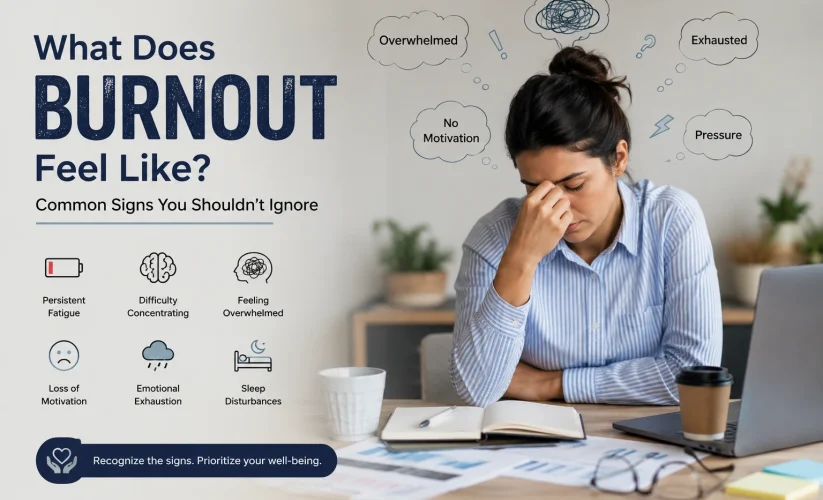
Burnout can be difficult to recognise, especially when exhaustion has gradually become part of everyday life. You may feel tired even after sleeping, struggle to concentrate, become easily irritated, lose motivation, or feel emotionally disconnected from things that once mattered to you.
If you have been asking yourself, “What does burnout feel like?”, the answer is not the same for everyone. Burnout can affect your emotional health, physical energy, thinking, behaviour, relationships, and ability to manage everyday responsibilities.
Many people initially assume they are simply having a stressful week or need to rest more. However, when prolonged stress continues without adequate recovery, it can contribute to a state of physical and emotional exhaustion commonly described as burnout.
Recognising the signs early can help you take appropriate steps before burnout begins to significantly affect your health, relationships, work, or quality of life.
What Does Burnout Feel Like?
Burnout often feels like being mentally and physically drained for an extended period. It can make ordinary responsibilities feel unusually difficult and may leave you feeling that you have very little energy left to give.
Common experiences include:
- Feeling exhausted even after resting
- Losing motivation to complete everyday tasks
- Becoming easily frustrated or irritated
- Finding it difficult to concentrate
- Feeling emotionally numb or detached
- Feeling overwhelmed by responsibilities
- Losing interest in activities you normally enjoy
- Having difficulty making decisions
- Feeling like your efforts are never enough
- Becoming increasingly negative or cynical
- Experiencing changes in sleep or appetite
Burnout does not necessarily appear suddenly. For many people, it develops gradually, which can make the early signs easy to overlook.
What Are the Main Signs of Burnout?
Burnout can affect several areas of your life. Understanding the different signs can make it easier to recognise what you are experiencing.
1. Emotional Exhaustion
One of the most common signs of burnout is emotional exhaustion.
You may feel as though your emotional resources are depleted. Small problems that you would normally manage may suddenly feel overwhelming.
You might notice:
- Feeling emotionally drained
- Becoming impatient with others
- Feeling overwhelmed easily
- Frequent frustration
- Reduced emotional tolerance
- Feeling unable to cope with additional responsibilities
You may also feel that you are constantly “running on empty.”
2. Physical Exhaustion
Burnout is not only an emotional experience. Prolonged stress can also leave you physically exhausted.
Possible experiences include:
- Persistent tiredness
- Low energy
- Headaches
- Muscle tension
- Changes in sleep
- Feeling physically heavy or sluggish
- Reduced ability to recover after demanding days
If physical symptoms are persistent or severe, they should not automatically be attributed to burnout. Other medical conditions can cause fatigue and related symptoms, so appropriate medical evaluation may be important.
3. Difficulty Concentrating
Burnout can make it harder to think clearly.
You may read something several times without absorbing it, forget small details, struggle to organise your day, or find simple decisions surprisingly difficult.
For example, tasks that once required little effort may suddenly seem mentally exhausting.
You may notice:
Cognitive Change | How It May Feel |
Poor concentration | “I can’t focus on anything.” |
Forgetfulness | Frequently forgetting small things |
Indecision | Struggling with simple choices |
Mental fatigue | Feeling tired from thinking |
Reduced productivity | Taking longer to complete routine tasks |
4. Loss of Motivation
Another important sign is a significant reduction in motivation.
You may continue completing your responsibilities, but it can feel as though you are functioning on autopilot.
You might think:
- “I don’t care anymore.”
- “I just want to get through the day.”
- “I don’t have the energy to start.”
- “Everything feels like an effort.”
This does not necessarily mean that you are lazy or incapable. Persistent emotional and mental exhaustion can make even ordinary tasks feel demanding.
5. Irritability and Frustration
When your emotional resources are depleted, your tolerance for stress may become lower.
You may find yourself:
- Getting annoyed over minor issues
- Reacting more strongly than usual
- Becoming impatient with colleagues or family
- Feeling easily overwhelmed
- Wanting to avoid conversations or responsibilities
Recognising these changes can be useful, particularly if they represent a significant difference from your usual behaviour.
What Does Burnout Feel Like Physically?
Burnout can involve physical symptoms, although these symptoms can also have many other causes.
Some people experience:
- Persistent fatigue
- Muscle tension
- Headaches
- Changes in sleep patterns
- Changes in appetite
- Feeling physically drained
- Reduced energy
- General feelings of being unwell
It is important not to assume that unexplained physical symptoms are caused by burnout alone. A doctor can help determine whether another medical issue may be contributing to them.
What Does Burnout Feel Like Mentally?
Mental burnout may feel like your brain has reached its limit.
You may experience:
- Difficulty concentrating
- Mental fog
- Forgetfulness
- Slower decision-making
- Constant worrying
- Feeling overwhelmed
- Reduced creativity
- Difficulty organising tasks
Even when you know what needs to be done, getting started can feel unusually difficult.
What Does Burnout Feel Like Emotionally?
Emotionally, burnout can involve a mixture of exhaustion, frustration, detachment, and reduced enjoyment.
Some people describe feeling:
- Emotionally empty
- Disconnected from others
- Uninterested in activities
- More negative than usual
- Hopeless about changing their circumstances
- Overwhelmed by ordinary responsibilities
Emotional detachment can sometimes be particularly confusing because you may still care about people or responsibilities but feel unable to emotionally engage with them in the same way.
Burnout vs. Stress: What Is the Difference?
Stress and burnout are related, but they are not identical.
Stress is often associated with feeling under pressure because demands exceed your perceived ability to manage them. Burnout generally develops when prolonged or repeated stress continues without sufficient recovery.
Stress | Burnout |
Often involves feeling pressured | Often involves feeling depleted |
You may feel anxious or restless | You may feel emotionally exhausted |
You may remain highly motivated | Motivation may decrease significantly |
Rest may provide some relief | Recovery may take more sustained effort |
You may feel there is too much to do | You may feel unable to keep doing it |
Can be short-term | Often develops after prolonged strain |
Experiencing stress does not automatically mean that you have burnout. However, persistent unmanaged stress can increase the risk of becoming exhausted and disengaged.
What Causes Burnout?
Burnout can result from prolonged demands without enough opportunity for recovery. It is not limited to one profession or lifestyle.
Possible contributing factors include:
Work-related pressures
- Excessive workload
- Long working hours
- Unrealistic expectations
- Lack of control over responsibilities
- Workplace conflict
- Limited recognition
- Poor work-life boundaries
Academic pressures
Students may experience burnout because of:
- Heavy academic workloads
- Examination pressure
- Competition
- High expectations
- Lack of rest
- Difficulty balancing studies and personal life
Personal responsibilities
Burnout can also develop when people carry significant responsibilities outside work or education.
These may include caring responsibilities, financial pressure, relationship difficulties, or major life changes.
Lack of recovery
Constantly staying busy without sufficient sleep, relaxation, social connection, or enjoyable activities can make it difficult for the body and mind to recover from ongoing stress.
Who Can Experience Burnout?
Burnout can affect almost anyone experiencing prolonged stress.
It may occur among:
- Working professionals
- Students
- Parents
- Caregivers
- Healthcare workers
- Business owners
- Teachers
- People managing multiple responsibilities
- Individuals experiencing prolonged personal stress
It is not a sign of weakness. Burnout reflects a prolonged imbalance between demands and available resources for coping and recovery.
How Can Burnout Affect Daily Life?
When burnout continues, it can influence many areas of everyday functioning.
Area | Possible Impact |
Work | Reduced productivity and motivation |
Relationships | Irritability, withdrawal, or emotional distance |
Sleep | Difficulty falling asleep or disrupted sleep |
Concentration | Forgetfulness and mental fatigue |
Self-care | Less interest in healthy routines |
Emotions | Increased frustration or emotional numbness |
Enjoyment | Reduced interest in hobbies and activities |
This is why recognising burnout early matters. What initially feels like tiredness can gradually affect broader aspects of life.
How Can You Recover From Burnout?
Recovery from burnout usually involves more than simply taking one day off.
Helpful steps may include:
Set realistic boundaries
Identify which responsibilities are essential and where you may be able to reduce unnecessary demands.
Prioritise sleep
Consistent, adequate sleep supports emotional regulation, concentration, and physical recovery.
Take meaningful breaks
Short periods of genuine rest can be more beneficial than remaining constantly connected to work or responsibilities.
Reintroduce enjoyable activities
Burnout can make hobbies feel like additional work. Start with small, low-pressure activities that provide enjoyment or relaxation.
Maintain social connection
Speaking with trusted friends, family members, or supportive people can reduce feelings of isolation.
Avoid expecting instant recovery
If burnout has developed over months, it may take time to recover. Be patient with yourself and focus on gradual improvement.
When Should You Seek Professional Help?
Burnout can sometimes improve after meaningful changes to workload, boundaries, sleep, and recovery. However, professional support may be appropriate when symptoms are persistent, severe, or significantly affecting daily life.
Consider speaking with a mental health professional if you experience:
- Persistent emotional exhaustion
- Significant loss of motivation
- Ongoing sleep difficulties
- Difficulty functioning at work or home
- Persistent anxiety
- Persistent low mood
- Increasing social withdrawal
- Feelings of hopelessness
- Difficulty managing everyday responsibilities
- Symptoms that continue despite attempts to rest and recover
A mental health professional can help explore whether burnout is the primary concern or whether another mental health condition may also be contributing to your symptoms.
If you are experiencing thoughts of self-harm or suicide, seek urgent professional help rather than trying to manage the situation alone.
Frequently Asked Questions About Burnout
What does burnout feel like emotionally?
Burnout may feel like emotional exhaustion, irritability, detachment, reduced motivation, or feeling overwhelmed. Some people also experience a sense of numbness or reduced enjoyment.
What does burnout feel like physically?
Physical burnout symptoms can include persistent fatigue, low energy, headaches, muscle tension, and changes in sleep. Because these symptoms can have many causes, persistent physical symptoms should be medically assessed.
How do you know if you are burned out?
Burnout may be more likely when prolonged stress is accompanied by persistent exhaustion, reduced motivation, emotional detachment, difficulty concentrating, and declining ability to manage everyday responsibilities.
Can burnout make you feel depressed?
Burnout and depression can share symptoms such as fatigue, reduced motivation, sleep changes, and loss of interest. However, they are not the same condition. If symptoms are persistent or significantly affecting your life, a mental health professional can help determine what may be happening.
How long does burnout last?
There is no fixed duration. Recovery depends on factors such as the underlying causes, how long the stress has continued, the person’s circumstances, and whether appropriate changes and support are available.
Can you recover from burnout?
Yes. Many people can recover from burnout by addressing the sources of prolonged stress, improving recovery and boundaries, and seeking professional support when necessary.
Conclusion
Understanding what burnout feels like can be the first step toward recognising that something needs to change.
Burnout may involve more than simply feeling tired. It can affect your emotions, physical energy, concentration, motivation, relationships, sleep, and ability to manage everyday responsibilities.
If you constantly feel exhausted, disconnected, overwhelmed, or unable to function as you normally would, it is worth paying attention to these changes rather than dismissing them as something you simply need to “push through.”
Rest, healthier boundaries, meaningful recovery, and social support can be important parts of recovery. When symptoms persist or begin significantly affecting your daily life, speaking with a qualified mental health professional can provide a clearer understanding of what you are experiencing and what support may be appropriate.
Recognising burnout is not a failure. It is an opportunity to understand what your mind and body may be asking you to change.
Contact Details:
Dr. Anjalika Atrey
Best Psychiatrist in Andheri, Mumbai
Address: Plot no. 38, Gulmohar Road, Andheri west, Juhu, Maharashtra 400049
Phone: 097605 91027
Website: thepsychiatrist.in