Social Anxiety Disorder Treatment – Symptoms, Therapy Options and When to Seek Help
By adminpsy

Introduction
Feeling nervous before a presentation, meeting new people, or speaking in front of a group is a common experience. However, when the fear of being judged, embarrassed, or negatively evaluated becomes persistent and starts interfering with everyday activities, it may be associated with social anxiety disorder.
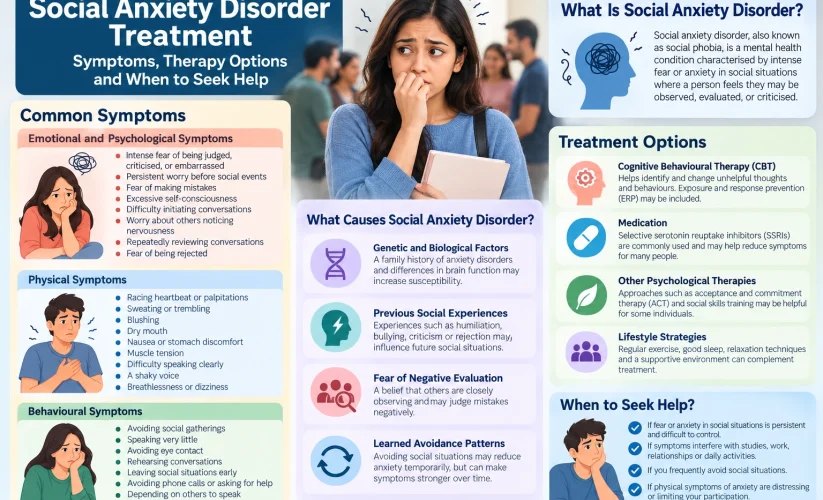
Social anxiety disorder, also known as social phobia, is a mental health condition characterised by intense fear or anxiety in social situations where a person feels they may be observed, evaluated, or criticised. It can affect conversations, academic activities, professional responsibilities, relationships, and other routine interactions.
Understanding social anxiety disorder treatment can help individuals learn about available therapies, recognise symptoms, and identify when professional assessment may be appropriate. Treatment may involve psychotherapy, medication when clinically indicated, and practical strategies for managing anxiety.
Social anxiety is more than ordinary shyness, and it does not reflect a lack of ability or confidence. With appropriate assessment and individualised care, people can learn to manage their symptoms and participate more comfortably in everyday life.
What Is Social Anxiety Disorder?
Social anxiety disorder is a type of anxiety disorder in which social interactions or situations involving possible scrutiny cause significant fear or distress. A person may worry excessively about saying something embarrassing, making a mistake, appearing nervous, or being negatively judged by others.
These concerns may arise before a social event, continue during the interaction, and persist afterwards as the person reviews what happened.
For example, an individual may avoid asking questions during a meeting because they fear being criticised. Another person may decline invitations because they worry about having nothing to say or appearing uncomfortable around others.
Although people with social anxiety may recognise that their fears are excessive, managing them can still be difficult. Avoiding social situations may provide temporary relief, but repeated avoidance can make it harder to participate in activities that matter to them.
Social anxiety disorder can develop during childhood or adolescence, although it can also begin in adulthood. Its severity varies, and professional assessment can help determine whether the symptoms meet the criteria for a clinical condition.
What Are the Symptoms of Social Anxiety Disorder?
Social anxiety disorder can affect thoughts, emotions, physical sensations, and behaviour. Symptoms may differ depending on the situation and the person’s concerns.
1. Emotional and Psychological Symptoms
Common psychological symptoms include:
- Intense fear of being judged, criticised, or embarrassed.
- Persistent worry before attending social events.
- Fear of making mistakes while speaking or interacting with others.
- Excessive self-consciousness in public.
- Difficulty initiating conversations with unfamiliar people.
- Worry about others noticing visible signs of nervousness.
- Repeatedly reviewing conversations after social interactions.
- Fear of being rejected or appearing incompetent.
These concerns can become difficult to manage when they repeatedly influence decisions or lead to avoidance.
2. Physical Symptoms
Social anxiety can activate the body’s stress response, producing physical symptoms such as:
- A racing heartbeat or palpitations.
- Sweating or trembling.
- Blushing.
- Dry mouth.
- Nausea or stomach discomfort.
- Muscle tension.
- Difficulty speaking clearly.
- A shaky voice.
- Breathlessness or dizziness in some situations.
Physical symptoms may increase a person’s fear of being noticed, creating additional anxiety during social interactions.
3. Behavioural Symptoms
Behavioural signs may include:
- Avoiding meetings, parties, presentations, or social gatherings.
- Speaking very little despite wanting to participate.
- Avoiding eye contact because of fear or discomfort.
- Repeatedly rehearsing conversations before speaking.
- Leaving social situations early.
- Avoiding phone calls or asking for help.
- Depending on another person to speak on their behalf.
Not everyone experiences all these symptoms. Their significance depends on how persistent they are and how much they interfere with everyday life.
What Causes Social Anxiety Disorder?
There is no single cause of social anxiety disorder. Research suggests that a combination of biological, psychological, genetic, and environmental factors may contribute.
1. Genetic and Biological Factors
A family history of anxiety disorders may be associated with an increased susceptibility to anxiety. Differences in how the brain processes perceived threats and social evaluation may also contribute.
However, these factors do not determine whether an individual will develop social anxiety disorder.
2. Previous Social Experiences
Experiences involving humiliation, bullying, criticism, rejection, or persistent negative evaluation may influence how a person approaches future social situations. However, social anxiety can develop without any clearly identifiable distressing event.
3. Fear of Negative Evaluation
A person may believe that others are closely observing their behaviour or are likely to interpret mistakes negatively. This expectation can increase anxiety before and during social interactions.
4. Learned Avoidance Patterns
Avoiding a feared situation may reduce anxiety temporarily. Over time, however, repeated avoidance can prevent a person from learning that some social situations are manageable, potentially maintaining the cycle of fear.
5. Stress and Life Changes
New responsibilities, academic pressure, workplace demands, or significant changes in social circumstances may make existing anxiety more noticeable.
These factors can contribute to symptoms, but the cause of social anxiety disorder should not be assumed without considering the individual’s overall circumstances.
What Are the Treatment Options for Social Anxiety Disorder?
Social anxiety disorder treatment depends on symptom severity, personal preferences, medical history, and the impact of anxiety on daily life. A qualified mental health professional can discuss suitable options following an assessment.
1. Cognitive Behavioural Therapy (CBT)
Cognitive behavioural therapy is a well-established psychological treatment for social anxiety disorder. It helps individuals identify unhelpful thinking patterns, understand how avoidance maintains anxiety, and develop more balanced responses to social situations.
CBT may involve:
- Identifying fears about criticism, embarrassment, or rejection.
- Examining assumptions about how other people perceive them.
- Recognising patterns of excessive self-monitoring.
- Developing more realistic interpretations of social interactions.
- Practising alternative ways of responding to anxiety.
- Gradually participating in previously avoided situations.
For example, someone who assumes that a brief pause during a conversation means they have embarrassed themselves may learn to consider other explanations and respond more flexibly.
CBT is tailored to the person’s difficulties and may include structured exercises between sessions. Progress varies, and the treatment plan should be reviewed with the therapist.
2. Exposure Therapy
Exposure is a therapeutic approach that involves gradually facing situations associated with fear rather than consistently avoiding them. It is commonly incorporated into CBT for social anxiety disorder.
The process is planned collaboratively with a trained professional and may involve manageable steps, such as asking a question, initiating a short conversation, or participating in a meeting.
Exposure is not about forcing someone into an overwhelming situation. Instead, it helps the person practise responding to anxiety while learning that feared outcomes do not always occur or may be manageable when they do.
Repeated practice can help reduce avoidance and support greater participation in everyday activities.
3. Guided Self-Help
Guided self-help may be an option for some individuals, particularly when symptoms are less severe or when they prefer a structured starting point.
This approach may involve CBT-based workbooks, educational materials, or suitable online programmes, with support from a trained professional.
Guided self-help can help people understand their anxiety, identify patterns of avoidance, and practise relevant techniques. A professional can help determine whether this approach is appropriate or whether more structured treatment would be beneficial.
4. Medication
Medication may be considered when clinically appropriate, depending on symptom severity, individual preference, medical history, and response to psychotherapy.
Selective serotonin reuptake inhibitors (SSRIs) are among the medicines used to treat social anxiety disorder. A psychiatrist or another appropriately qualified prescribing professional can explain the potential benefits, side effects, interactions, and expected time required for improvement.
Medication may take several weeks to produce its full effect. Follow-up is important to monitor symptoms, assess side effects, and review the treatment plan.
Medicines should be taken only as prescribed. Do not start, stop, or change medication without consulting the treating professional.
5. Combined Treatment
Some individuals may benefit from psychotherapy and medication together, particularly when symptoms remain difficult to manage with one approach alone.
The decision depends on the individual’s clinical needs and preferences. Treatment response varies, and ongoing review helps determine whether adjustments are necessary.
Social Anxiety Disorder Treatment: Therapy vs Medication
The choice between psychotherapy and medication depends on individual circumstances. The following table provides a general comparison.
Treatment option | Main purpose | Important considerations |
Cognitive behavioural therapy | Addresses unhelpful thoughts and behaviours associated with social fear | Requires active participation and regular practice |
Exposure-based therapy | Helps individuals gradually face feared social situations | Should be planned at a manageable pace with appropriate guidance |
Guided self-help | Provides structured exercises and educational support | May not be sufficient for everyone |
Medication | May reduce symptoms of social anxiety | Requires medical assessment and monitoring |
Combined treatment | Addresses symptoms through more than one approach | The plan should be individualised and reviewed regularly |
For adults with social anxiety disorder, individual CBT specifically developed for the condition is an important first-line treatment option in established clinical guidance. Medication may be considered according to the person’s preferences, clinical needs, and response to treatment.
When Should You Seek Professional Help?
Consider consulting a qualified mental health professional if:
- Fear of judgment consistently affects social interactions.
- You avoid work, education, appointments, or social activities because of anxiety.
- Physical symptoms make everyday interactions difficult.
- Anxiety affects relationships, concentration, sleep, or quality of life.
- You spend significant time worrying before or after social events.
- Self-help strategies have not sufficiently addressed your difficulties.
A professional assessment can help determine whether the symptoms are consistent with social anxiety disorder or another condition and guide appropriate treatment.
If anxiety is accompanied by severe emotional distress or thoughts of self-harm, seek urgent professional support or contact local emergency services if there is immediate danger.
Frequently Asked Questions About Social Anxiety Disorder Treatment
1. What is the most effective treatment for social anxiety disorder?
Individual cognitive behavioural therapy specifically designed for social anxiety disorder is a well-established treatment option. Medication may also be considered, depending on the person’s symptoms, preferences, and clinical assessment.
2. Can social anxiety disorder be treated without medication?
Yes. Psychotherapy, particularly CBT that includes appropriate exposure-based work, can be used without medication. A qualified professional can help determine whether psychotherapy alone is suitable for an individual’s circumstances.
3. How long does social anxiety disorder treatment take?
The duration varies depending on symptom severity, treatment type, individual needs, and progress. Structured CBT may take place over several months, while medication may require several weeks to produce its full effect. A treating professional can discuss an appropriate treatment schedule.
4. Is social anxiety disorder the same as shyness?
No. Shyness is a personality characteristic or a temporary feeling of discomfort in certain situations. Social anxiety disorder involves persistent and disproportionate fear that causes significant distress or interferes with daily functioning.
5. Can social anxiety disorder affect work and relationships?
Yes. It may make presentations, meetings, conversations, networking, dating, and other social interactions difficult. Appropriate treatment can help individuals develop ways to manage anxiety and participate more comfortably in these areas.
6. When should I consult a psychiatrist for social anxiety?
Consider seeking an assessment when anxiety repeatedly affects everyday activities, leads to avoidance, or becomes difficult to manage independently. A psychiatrist can assess symptoms and discuss appropriate treatment options.
Conclusion
Social anxiety disorder can affect how a person approaches conversations, relationships, education, work, and everyday social situations. Persistent fear of judgment or embarrassment may lead to distress and avoidance, but these experiences can be assessed and addressed through appropriate care.
Social anxiety disorder treatment may involve cognitive behavioural therapy, gradual exposure, guided self-help, medication when indicated, or a combination of approaches. The most suitable plan depends on the individual’s symptoms, circumstances, and preferences.
If social anxiety is affecting daily life, seeking professional assessment can be an important step towards understanding the symptoms and exploring suitable treatment options.
Medical Disclaimer: This article is intended for general educational purposes only. It does not replace professional medical advice, diagnosis, or treatment. Consult a qualified healthcare professional for an assessment of your symptoms and appropriate guidance.
Contact Details:
Dr. Anjalika Atrey
Best Psychiatrist in Andheri, Mumbai
Address: Plot no. 38, Gulmohar Road, Andheri west, Juhu, Maharashtra 400049
Phone: 097605 91027
Website: thepsychiatrist.in